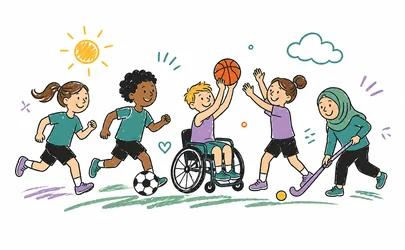

Creating inclusive sports sessions for children is becoming increasingly important for coaches, teachers and organisations. As awareness of neurodiversity continues to grow, there is a greater need to ensure that sport and physical activity are accessible, supportive and enjoyable for every child.
Inclusion in sport is not about doing something extra. It is about making thoughtful adjustments so that all children can take part in a way that works for them.
Understanding inclusion in sport
Inclusive sport means creating environments where every child feels able to participate, regardless of how they think, learn or process the world. This includes children who are neurodivergent, such as those with autism, ADHD, dyslexia and dyspraxia.
Every session is already neurodiverse. Recognising this allows coaches and teachers to move away from a one-size-fits-all approach and towards more flexible and supportive ways of working.
Why some children struggle in sports sessions
Not all children experience sport in the same way. Some may find fast-paced environments overwhelming, while others may struggle to process instructions quickly or feel unsure about what is expected of them.
Children may experience sensory overload, difficulty following multi-step instructions, or anxiety in social situations. When these challenges are not recognised, it can lead to frustration, reduced participation and a loss of confidence.
Simple ways to make sports sessions more inclusive
There are practical strategies that can be introduced straight away to improve inclusion.
Clear communication makes a significant difference. Breaking instructions into smaller steps and using demonstrations alongside verbal explanations helps children understand what is expected.
Consistent routines also support inclusion. When sessions follow a predictable structure, children feel more secure and are more likely to engage.
Allowing time to process is equally important. Not all children respond immediately, and giving space for this can improve both confidence and participation.
Reducing unnecessary noise and distractions can also support children who may feel overwhelmed in busy environments.
The impact of inclusive coaching
Inclusive coaching benefits all children, not just those who are neurodivergent. When sessions are structured, clear and supportive, participation increases and children feel more confident in their abilities.
These environments also help build positive relationships, improve communication and support long-term engagement in physical activity.
Supporting every child to thrive in sport
The aim of inclusive sport is to create environments where every child feels understood, supported and capable. This does not require major changes, but it does require awareness, reflection and a willingness to adapt.
When coaches and teachers take the time to understand the needs of the children they work with, the impact can be significant and long-lasting.
Making meaningful changes
Creating inclusive sports sessions is about making small, meaningful changes that allow every child to take part and succeed. When we focus on supporting different ways of thinking and learning, we create better experiences for everyone.
If you are looking to improve inclusion in your sessions, Beyond Typical Training provides practical support to help you build confidence and create environments where every kind of mind can thrive.